An artificial intelligence use becomes operational when it helps an identified person make a defined decision. The starting point is not the tool. It is the situation, the permitted input, the expected output, the person who reviews it and the observable event that stops the test.
How do you start with the decision instead of the tool?
This is not a plan to “put AI everywhere.” It turns a vague use into work that can be inspected.
Short answer
Choose an artificial intelligence use by starting with a specific human decision and the evidence its owner needs. Then frame a bounded task: one situation, a permitted input, a reviewable output, an accountable owner and a stop test. AI may propose a summary, classification, extraction, draft or comparison; it should not trigger the next step by itself. The owner accepts, corrects or rejects the output by returning to the source. Narrow or stop the test if the output cannot be checked, uses prohibited material or has no named decision owner. France Num states that “a company’s sensitive data must not be disclosed on just any website” (France Num).
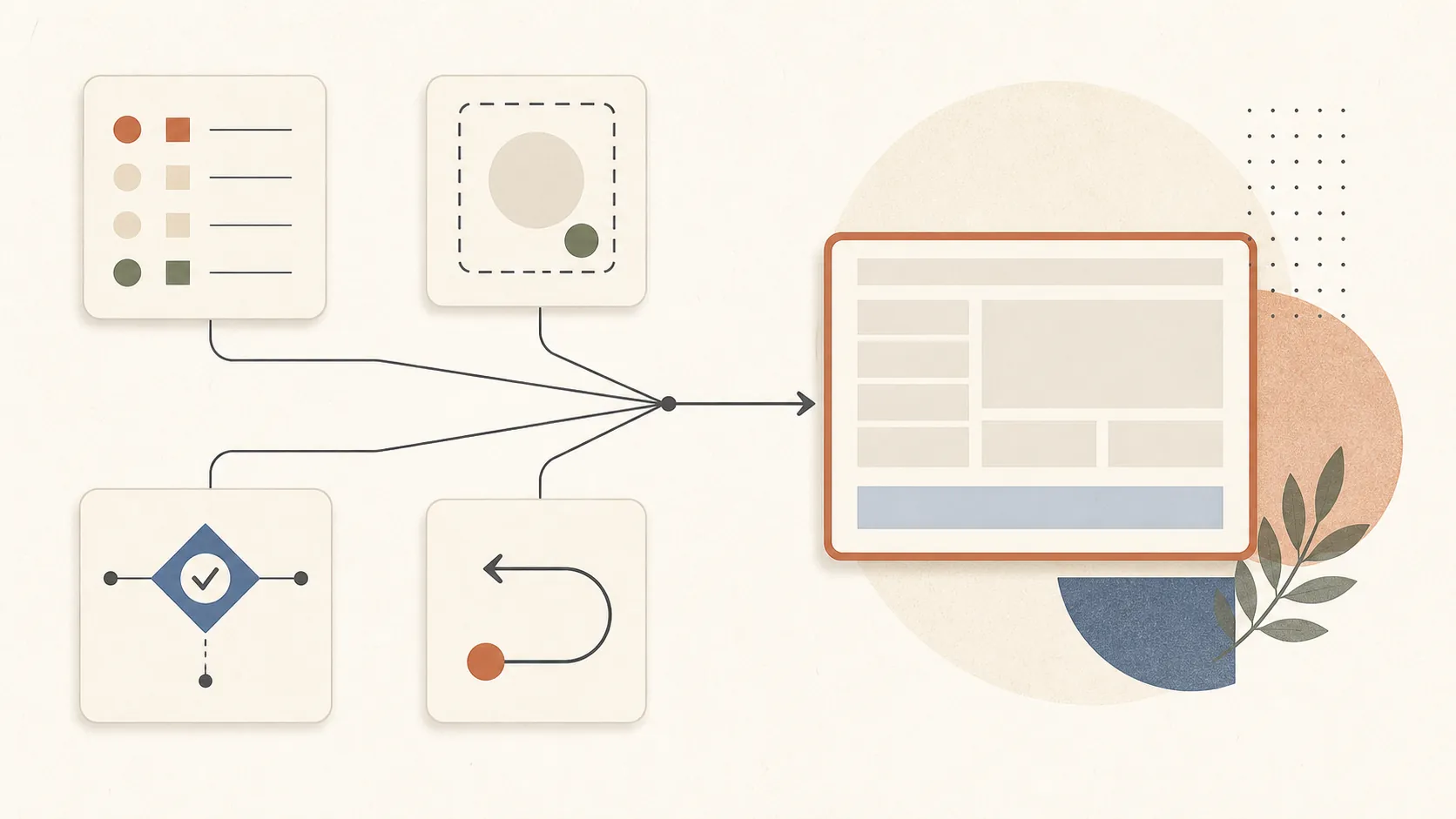
“Which AI should we use?” is an early question. Different tools may produce polished answers without serving the same decision. A clearly named decision, however, gives you one shared frame for reviewing their outputs.
Write this sentence first: “Using this input, the tool prepares this output so this person can make this decision.” If one part is missing, the use case is not framed.
Consider the classification of incoming requests. The tool receives the requests and the permitted categories. It proposes a category and a short reason. The queue owner accepts or corrects each proposal. The objective is not a classification that merely looks convincing. The owner must be able to locate what in the input supports the proposal before acting.
This rule separates three activities that are easy to blur: producing an output, reviewing that output and making a decision. The tool contributes to the first. A named person retains the other two.
If you do not know who reviews the output, the task is not yet framed tightly enough.
How do you use the situation / input / output / owner / stop-test matrix?
The matrix below does not rank tools or promise effects. It turns familiar uses into tests whose outputs remain visible and reversible.
| Situation | Permitted input | Reviewable output | Owner | Stop test |
|---|---|---|---|---|
| A meeting record needs review | Meeting record text | List of points linked to the relevant passages | Person responsible for the record | A point cannot be found in the source text |
| Incoming requests need classification | Requests and permitted categories | Proposed category with a short reason | Queue owner | A proposal uses a category outside the permitted list |
| Information needs extraction | Document and requested fields | Table linking each value to its source passage | Document owner | A value cannot be linked to its source |
| A draft needs preparation | Instruction, audience and permitted material | Draft clearly labelled as a draft | Person who signs or uses the text | The draft adds a fact outside the permitted material |
| Two versions need comparison | Both versions and comparison criteria | Differences linked to the relevant passages | Person choosing the version | A reported difference does not appear in the texts |
The stop test is not a broad quality score. It is an observable event. It must halt the test before an output is sent, copied into a record or used to trigger an operation.
Retain a row where you control the input, can challenge the output and keep the decision with its owner.
How do you turn evidence into part of the instruction?
A useful instruction asks for more than an answer. It asks for what a reviewer needs to verify that answer. Require links to relevant passages in a summary. Connect every extracted value to its source document. Tie every reported difference to both versions. Ask a classification to justify itself from the input.
The output format is therefore part of the control. A free-form answer may look satisfactory without showing where it came from. A structured output makes acceptance, correction and rejection visible.
State the prohibitions before the test as well. The tool must not add a fact from outside the input, invent a category, make the final decision or use data you have not authorised. France Num states that “a company’s sensitive data must not be disclosed on just any website” (France Num).
The protocol proposed here is a practical precaution, not legal advice or a guarantee of compliance.
How can requests be classified without delegating the decision?
This example is entirely fictional. It describes no real engagement or observed performance.
A team receives written requests and wants help preparing their classification. It does not ask the tool to reply, send a message or change a record. It assigns only the preparation of a proposal.
The situation is framed as follows: an incoming request needs routing to an existing category. The input contains the request text and a closed list of permitted categories. The expected output contains the proposed category, a short reason and the excerpt that supports that reason. The queue owner reviews the proposal, returns to the original request and chooses whether to accept or correct the classification.
The test stops if the tool creates a category, relies on something absent from the request or gives a proposal without a verifiable excerpt. A persuasive proposal does not override the stop test. The rule was written before the output appeared; it is not changed to rescue an appealing answer.
This is what choosing by decision and evidence means in practice. The decision is where to route the request. The evidence is the visible connection between the proposal and the received text. The owner keeps the final say.
What should you check before any use?
Complete every line before testing a tool. A blank line points to a decision that is still implicit.
- Situation: what existing work triggers the use?
- Decision: what must the owner accept, correct, reject or choose?
- Permitted input: which documents, data or categories may be submitted?
- Prohibited input: what must never be submitted or added?
- Expected output: what exact format must the tool produce?
- Evidence: how will each part of the output connect to the input?
- Owner: who reviews the output and retains the final decision?
- Blocked action: which next step must never run automatically?
- Stop test: what observable event immediately ends the test?
- Record: where will accepted, corrected and rejected items be noted?
The checklist is not designed to make the use more ambitious. It is designed to make it challengeable. If the owner cannot explain why an output was accepted, the requested evidence is insufficient. If reviewing it requires another project, the task is too broad.
How do you compare tools without building another tool list?
A general list cannot decide your case. Compare only the candidates available in your context, using the same input, instruction and review frame. Do not change the case halfway through the comparison.
For each output, check:
- whether it follows the requested format;
- whether it links back to the input or source passage;
- whether prohibited material is absent;
- whether the owner can accept or correct it without ambiguity;
- whether the test excludes sensitive data;
- whether the stop test written beforehand is respected.
Keep the outputs and the owner’s corrections. You are then comparing responses to one situation, not general promises. To extend this frame, use the artificial intelligence tool choice sheet.
Decide after the test
Return to the matrix and checklist. For each output, record what was accepted, corrected or rejected. Then check whether the owner could trace the material used in the input and whether errors remained visible before any action.
Narrow or stop the task if the format is wrong, evidence is missing, a prohibition is crossed or the owner cannot decide. If the frame holds, document the instruction, prohibitions, review and stop test. You have defined a specific use. You have not demonstrated a general property of artificial intelligence.
A convincing output is not a validated process. The record of corrections matters more than the impression it creates.
Frequently asked questions about artificial intelligence use
What can artificial intelligence do in this framework?
It can prepare an output the owner knows how to review: a source-linked summary, a justified classification, a traceable extraction, a draft to edit or a comparison of versions. These are proposed tasks, not performance claims.
How can I use AI for free?
Free access can be used to test a task with fictional or non-sensitive material. It validates neither the task, the data nor the output. Perform the planned review and stop if the required check becomes impossible.
Free describes a mode of access. It does not validate the task, the data or the output.
How should I choose between AI tools?
Give them the same input and instruction. Review each output against the same criteria: format, evidence, prohibitions, human control and stop test. Choose for the ability to support your decision within this frame, not for a position on a general list.
When should the test stop?
Stop as soon as the event written in the stop test occurs: an untraceable source, prohibited material, an invented category, an output that cannot be reviewed or no accountable owner. The test protects the decision from the favourable impression created by an isolated answer.
Conclusion: a use case stands on its decision and evidence
Artificial intelligence use does not begin with a catalogue of possibilities. It begins with a work sentence: a situation, an input, an output and a person who decides. Evidence connects the output to what was supplied. The stop test prevents an appealing answer from erasing the agreed boundary.
Choose a use you can challenge. Name the owner. Block automatic action. Then retain the record of what was accepted, corrected or rejected. That is how a test remains a test and a human decision remains human.