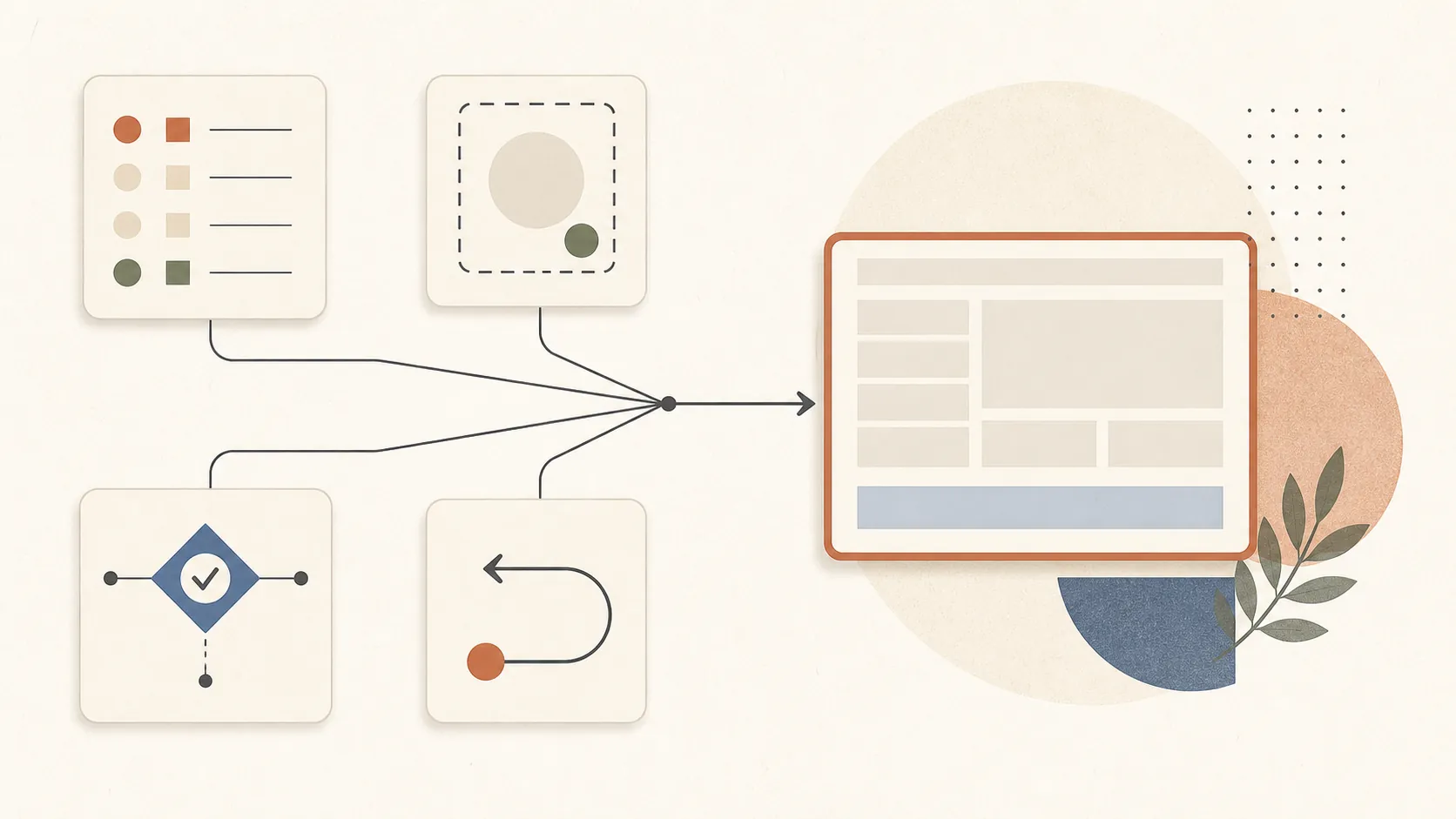
An artificial intelligence application should be chosen for a defined piece of work, not for its visibility. Write down the task, the data it may receive, the evidence a reviewer needs, the systems it may touch and the way to stop using it. A candidate is suitable only inside those boundaries. This packet does not rank vendors, name a universal winner or establish which AI is “most used”.
What is an artificial intelligence application?
Google Cloud defines AI applications as software programs that use AI techniques to perform specific tasks. Its examples span natural-language processing, computer vision, machine learning and robotics (Google Cloud). That breadth is why the label alone is a poor buying brief. An application can be a stand-alone interface, a feature inside another product or a component connected to a workflow.
The useful question is therefore not “Which app is famous?” but “What bounded job should this application perform?” This page owns application integration and exit. The existing Which AI should I choose? article owns the broader choice between tools and categories. That boundary also prevents a broad interest in AI from becoming an unbounded integration project.
Which AI application should you choose for a specific task?
Start with one observable output. “Help with marketing” is too open. “Turn an approved brief into a draft that a named editor reviews” gives you an input, an output and an owner. Use the matrix before looking at product pages.
| Decision field | Question to write down | Evidence for acceptance | Reason to stop |
|---|---|---|---|
| Task | What exact output must be produced? | A reviewer can compare it with the brief. | The output does not fit the defined use. |
| Allowed data | What may enter the application? | The test input stays inside the written boundary. | The task requires material outside that boundary. |
| Review | Who checks the result, and against what? | The reviewer can open the source or apply the stated rule. | No practical verification is available. |
| Integration | May it only draft, or also read and write elsewhere? | Every permitted connection is named. | The candidate needs broader access than intended. |
| Exit | What must remain usable after removal? | Inputs, instructions and accepted outputs can be recovered. | Leaving would strand essential work. |
The matrix produces a local verdict, not a permanent label. Write “suitable for this task”, “unsuitable within this scope” or “requires a different setup”. Keep the rejected option and its reason beside the option you retain. A later team will not confuse one failed trial with a general judgment about the technology, and another candidate can receive the same brief without the standard changing during the comparison.
Complete the matrix in this order:
- Describe the task without a product name.
- Prepare an authorized example input.
- Name the human reviewer and the evidence they will inspect.
- Keep the first integration boundary narrow.
- Record what must be exportable or reproducible if the application is removed.
How should you define the allowed-data boundary?
Treat the data boundary as an operating instruction, not as a vague warning. List what the trial may contain and what it may not contain. If a useful trial can run on public, fictional or deliberately prepared material, begin there. If the task only makes sense with another category of material, pause and reassess the setup before moving the boundary.
The CNIL maintains an AI hub that brings together its publications and resources on artificial intelligence and personal data (CNIL). Use the hub as a source to consult, not as a substitute for documenting your own boundary. This article gives no legal advice.
How can a reviewer verify the application's output?
Define the review before the trial. A fluent answer is not evidence. For a summary, the reviewer needs the approved source and checks whether the draft adds or omits material. For extraction, the reviewer compares the fields with the source. For a proposed action, the reviewer checks the rule that permits the action before anything leaves the draft stage.
- Source: identify the material the reviewer may open.
- Check: state what must match or remain absent.
- Owner: name the person who accepts or rejects the output.
- Record: keep the accepted version and the reason for rejection when that helps the work.
This is not a vendor score. It is an acceptance method for the task in front of you.
Write the verdict in terms the next reviewer can apply. Avoid “the answer looks good”. Prefer “the draft includes the brief's elements, adds no fact and remains at the preparation stage”. If the check fails, record the precise missing point. The next trial can then address the same observable defect instead of starting again from a general impression.
Where should you place the integration boundary?
Separate assistance from action. An application that drafts text inside its own interface crosses a smaller boundary than one that reads shared files, updates records or sends messages. Do not grant a broad connection merely because it is available. Name each system the application may read from, each place it may write to and the person who approves the transition from draft to action.
If the candidate only works by expanding that boundary, the matrix has found a mismatch. You can narrow the task, choose another setup or stop. That decision is more useful than forcing a promising demo into an unsuitable workflow.
Recheck the boundary whenever the role changes. A tool that prepares a draft does not gain the right to publish it because the draft was accepted. A tool that consults a source does not gain the right to modify it. Every added action needs its own owner, review evidence and exit condition. The decision therefore remains attached to the actual work, not to a general promise about AI.
What exit option should an AI application provide?
An exit option makes the choice reversible. Keep the original inputs outside the application where practical. Preserve the instructions that define acceptable work. Decide which accepted outputs need to remain available and in what ordinary format. Record any connection that must be removed when the trial ends.
- Can the team continue the task without the application?
- Can approved material be recovered in a usable form?
- Can access and integrations be removed cleanly?
- Can another candidate be tested with the same brief?
A weak exit is a reason to reduce the scope before adoption. It is not a reason to invent a score or predict a vendor's future.
Test the exit before the application becomes a habit. Take an accepted result, recover its input and find the instruction used to produce it. Then check that someone who did not run the trial understands what to keep, repeat or remove. This does not predict a failure; it checks that the work remains understandable outside the interface. If essential information exists only in a session, add it to the working record or reduce the dependency. Remove any connection that no longer has a clear purpose. Exit then becomes an observable decision step, just like the task and review.
What is the best free AI application?
There is no universal winner. “Free” does not settle the task, allowed data, review method, integration boundary or exit option. Apply the same matrix to any access offer visible when you test it, and verify the current offer on the provider's own page. For the separate French-language intent, use the existing guide to free AI in French. This article does not repeat its tool-selection scope.
Which AI application is the most used?
This closed source packet does not establish a “most used” winner. The fresh search results show that people ask the question, but search-result types are not evidence of product usage. App-store pages, explainers, list articles and videos also measure different things. No usage table or league table is inferred here.
If several people will use the chosen application, turn the matrix into shared operating rules. The company AI charter offers a separate framework for that work.